West Natick has the Natick Mall, Sherwood Plaza and thousands of condominiums and apartments along Route 135. In a building like that, a leak in one unit rarely stays there.
Key takeaways
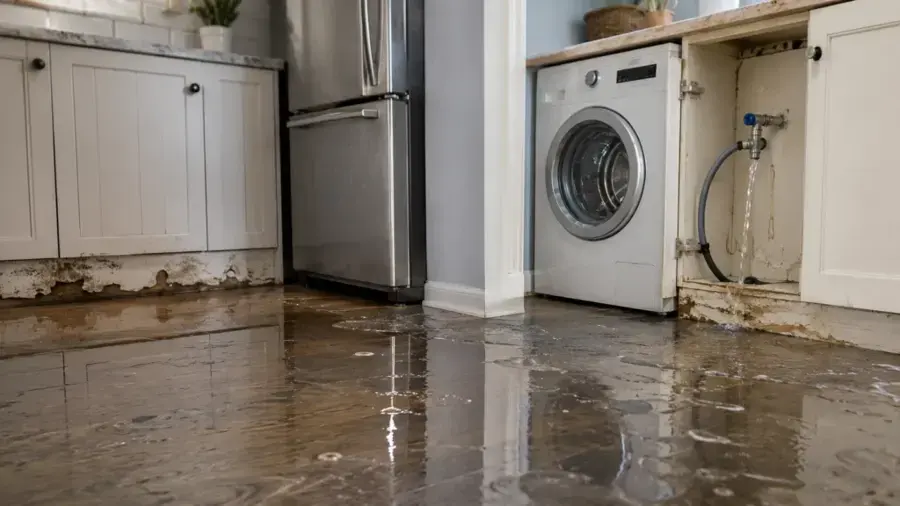
- A leaking washer, dishwasher or ice maker can soak a floor and a subfloor and then drip through the ceiling below.
- Shut off the water to the appliance first, then cut power near wet outlets.
- Tell the neighbor below, the property manager or condo association, and your insurer as early as possible.
- The ceiling below is opened and dried, not just painted over.
- Photograph everything in both units before anything is moved.
Why condominium leaks travel
In a condominium or apartment building, floors and ceilings are shared. A leak on one floor can drip into the unit below within minutes.
West Natick has many condominiums and apartments along Route 135, so a leak there is often a two unit problem.
The neighbor below may not know about the leak until water shows. That is why a quick phone call or knock on the door helps both households.
- Shared floors: water that soaks a subfloor finds the ceiling below.
- Shared walls: pipes in a wall can leak into the unit next door.
- Shared stacks: a pipe that serves several units can carry a problem up or down.
- Common stacks: a leak in one unit's plumbing can travel to units above and below.
Where appliance leaks start
Most appliance leaks are small at first. A hose loosens, a seal wears out or a drain clogs, and water drips for a while before anyone sees it.
A washer hose that bursts is a different story. It can run for hours and soak an entire floor.
Condominium buildings often limit what a resident can do about plumbing in shared walls and floors. That makes it more important to act early and report quickly.
A leak behind a dishwasher or under a washer can run under cabinets and flooring where no one sees it. The first sign is often a smell, a warped floor or a stain in the unit below.
The usual suspects
These appliances cause most of the problems.
- Washers: supply hoses and drain hoses.
- Dishwashers: door seals, supply hoses and drain connections.
- Refrigerators: ice maker tubing and drip pans.
- Water heaters: slow seeps from fittings and tanks.
Why a slow leak is worse
A slow leak can run for weeks. By the time a stain shows on the ceiling below, the subfloor and the wall base are already wet.
What to do in the first minutes
The first minutes are about stopping the water and keeping everyone safe.
A small leak can be managed with towels and a wet vacuum. A larger one needs the water stopped at the source and the extraction crew called in.
Written notes help. Record the time you found the leak, what you shut off and who you told.
- Shut off the water: close the valve behind the appliance, or the unit's main valve.
- Cut power: if water is near outlets or the appliance, switch off the breaker.
- Contain: use towels and a wet vacuum to hold water back from the door.
- Notify: tell the neighbor below and the property manager right away.
- Photograph: take photos of the appliance, the floor and any wet items.
The unit below
A stained or sagging ceiling in the unit below is a sign that water is above it. The ceiling can hold a lot of water, and a bulge can fall without warning.
A ceiling leak water damage job starts with making the area safe. A trapped pocket of water may be released in a controlled way before the drywall is opened.
After that, the wet drywall and insulation are removed and the cavity is dried.
The neighbor who owns the unit below may also need help. Offering photos and access speeds up cleanup for both households.
Insulation above the ceiling holds water like a sponge. It is removed along with the wet drywall, since it cannot be dried in place.
- Keep out from under a sagging ceiling.
- Move furniture and electronics away.
- Do not poke a bulge without a bucket and protective gear.
- Water stains that spread or darken are a sign the leak is still active.
Drying both units
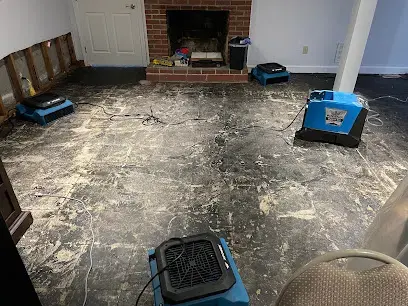
Appliance leaks wet the floor, the subfloor and the ceiling below. The appliance leak water damage team dries the floor and the cavity under it, and the ceiling below gets the same attention.
Drying is measured, not guessed. Moisture meters and thermal imaging show where water traveled, and equipment runs until readings are dry.
Equipment in a condo is placed with care for noise and for neighbors.
The drying team also checks the walls on both sides of the leak. Water travels along framing and can show up in a room that seemed untouched.
Hardwood and laminate floors react quickly. Laminate swells at the seams, and hardwood cups, so drying mats and fast action help limit permanent damage.
- Floor and subfloor: dried with mats or panels where the leak soaked in.
- Ceiling cavity below: opened and dried so water cannot hide above the drywall.
- Wall bases: checked with meters and opened if wet.
- Contents: sorted and dried or discarded.
Insurance and the association
Condo coverage can be complicated. The association's policy and the owner's policy each cover different parts of the building and its contents.
Photographs, a written timeline and a list of damaged items help every claim. Keep receipts for any emergency work.
The association may have rules about contractors and work hours. Telling the property manager early avoids delays.
The unit's owner and the unit below may both need temporary help with cooking, laundry and sleeping while drying equipment runs.
- Report early: tell the association and your insurer as soon as possible.
- Keep records: photos, dates, names and receipts.
- Ask who covers what: the association, the owner and the neighbor may each have a share.
Preventing the next leak
A few habits cut the risk. Replace old rubber hoses with braided ones, check the area behind the appliances each season and know where the shutoff valves are.
Natick's Water/Sewer Division is on call around the clock for burst water pipes, but a leak inside a unit is the owner's to stop.
The Natick town page lists every service the restoration team provides when a leak gets out of hand.
Appliances age out. A washer or dishwasher that is many years old is a good candidate for a new hose or seal before it fails.
Shutting off the water when leaving for a trip is a simple habit that prevents the worst surprises.