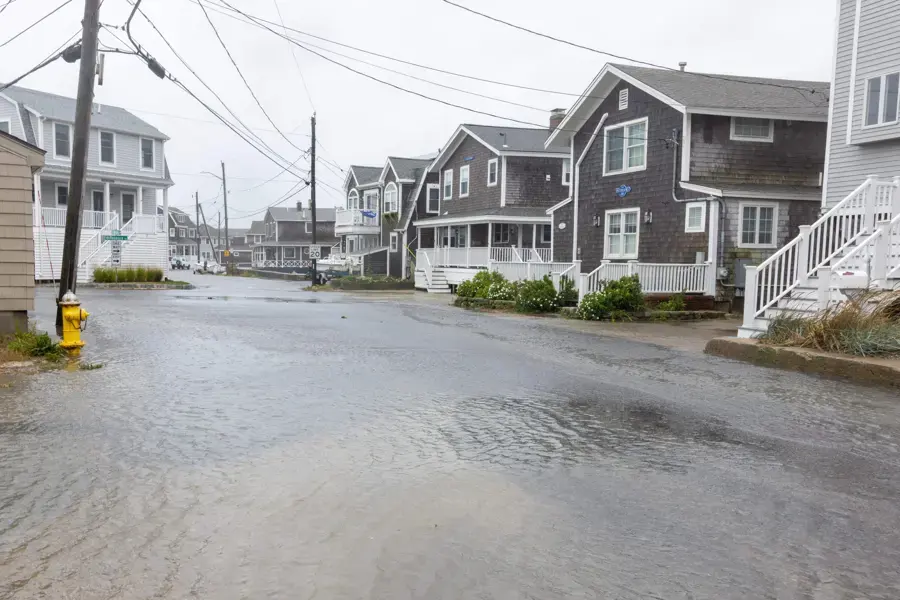
The Sudbury River runs through Saxonville, and the Framingham reservoirs sit in the same watershed. When heavy rain pushes the river up, water can reach a house that never had a plumbing problem.
Key takeaways
- River and storm water that enters a house is treated as Category 3, because it carries soil, bacteria and whatever else the flood picked up.
- A river flood is not the same job as a burst pipe, since the water is contaminated and the cleanup removes more material.
- Standing water comes out first, then wet framing, drywall and flooring are checked, removed or dried as needed.
- Do not wade through the water or run electrical equipment in it, and shut off power to the affected area first.
- Document the high water mark, the damage and every item that was moved before cleanup starts.
Why Saxonville sits in a river conversation
The Sudbury River is one of the named water features of Framingham, and it runs through Saxonville. The Sudbury Reservoir sits on the western edge of the city, and Farm Pond, Learned Pond and Lake Waushakum add to the local water map.
That does not mean every Saxonville street floods. It does mean that a property near the river, or one at a low point, can see water after a long soaking rain.
- Sudbury River: the main river through Saxonville and the source of most river flood worries.
- Framingham reservoirs: part of the same watershed, so heavy rain affects the whole system.
- March 2010: the rainstorms that month flooded rivers and basements across eastern Massachusetts.
- Nor'easters: a slow storm can drop heavy rain for hours, and the ground fills up.
River water is not clean water
Restoration work sorts water by how dirty it is. A clean supply pipe leak is one category, and flood water from a river or a storm is the dirtiest.
River water picks up soil, runoff, fuel, animal waste and sewage as it moves. That puts it in Category 3, which changes how the team works, what protective gear it wears and what is thrown away.
The main service page for storm and flood cleanup treats Nor'easter rain and high Sudbury River water the same way for that reason.
For a homeowner, the practical result is that river water inside a house is handled as a contamination job first and a drying job second.
What that means for porous materials
Anything soft that soaked up Category 3 water usually cannot be cleaned and saved.
- Carpet and pad: removed and discarded, not dried.
- Insulation: wet insulation in a wall cavity is taken out.
- Drywall: usually cut out above the high water mark, not left to dry.
- Upholstered furniture and mattresses: most often a loss.
What can be saved
Hard, nonporous surfaces and solid framing can be cleaned, treated and dried. Wood studs, concrete and tile are common examples.
The first day after the water arrives
The goal on day one is to stop the loss from growing. That means safety, then water removal, then a plan.
Everyone stays out of the water until the power is off in the affected area. If the electrical panel is in the wet space, a qualified electrician or the utility is the right call, not a homeowner with wet boots.
Once the power is handled, the restoration team brings pumps, moisture meters and protective gear and starts by checking what the water touched. That first walk through sets the plan for removal and drying.
A basement is usually the first place river water lands, but it is not always the only one. Ground floor rooms on a low lot can take water too, and the plan covers every wet area.
- Power first: shut off breakers to wet areas, or the whole house if the panel is exposed.
- Stay out: avoid standing in the water, and keep children and pets away.
- Photograph: take photos of the high water mark on the walls, the floors and the contents.
- Call early: standing water wicks into walls and framing the longer it sits.
Pumping out and the extraction step
Water extraction is the first physical step. The extraction crew uses submersible pumps for deep water and extractors for what is left on the floor.
Once the water is out, the crew removes what cannot be dried, cleans the surfaces and treats them with antimicrobial. Only then does drying begin.
Skipping that order leaves wet, dirty material in the structure. The water extraction page covers how the standing water is pulled out before it wicks upward.
Speed matters here. Water that sits in a house soaks upward into drywall and down into the subfloor, and each hour widens the area that has to be opened.
Drying the structure to a reading
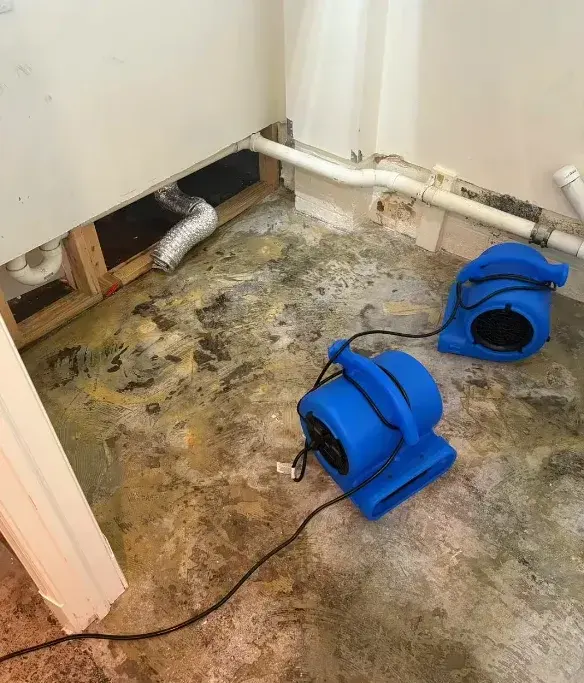
After removal, the drying team sets air movers and dehumidifiers and measures moisture in the studs, the sill and the subfloor.
The drying goal follows the IICRC S500 standard. The team does not pull the equipment because a wall feels dry. It pulls it when the moisture readings reach the dry standard.
Capes, ranches and split levels from the 1950s and 1960s are common around Saxonville, Nobscot and Pinefield, and many have basements that were finished later.
A finished basement wall hides a lot of wet material, so the team often opens it up to check.
- Moisture meters: readings in framing, subfloor and concrete.
- Thermal imaging: shows damp areas behind finished surfaces.
- Dehumidifiers: pull moisture out of the air so the walls can release theirs.
- Daily checks: readings are taken until they match the dry standard.
Preventing a repeat
No homeowner can control a river. A few steps still reduce the damage the next time the water rises.
Keep valuables and paperwork off the basement floor, and keep a written list of what is stored there. Check the sump pit and the discharge before every big storm.
If a property floods more than once, it is worth asking an insurer and a drainage professional what options exist. Restoration crews dry and repair, but they do not change where the river goes.
A short checklist helps when a storm is on the way. Most of it takes an afternoon and costs little.
- Raise valuables: move paperwork, electronics and keepsakes off the basement floor and onto high shelves.
- Check the sump pit: confirm the pump runs and the discharge pipe is clear.
- Clear drains: keep gutters, downspouts and yard drains clear of leaves.
- Know the panel: everyone in the house should know where the main breaker is.
- Keep photos current: a recent set of photos of each room speeds up a claim.
When to call for help
River and storm flooding is not a do it yourself job. The water is contaminated, the structure is wet in places that are hard to see and the first day matters most.
The restoration team covers Saxonville and the rest of Framingham around the clock, and the whole service area is covered the same way. If the water is in the house, the call is worth making early.