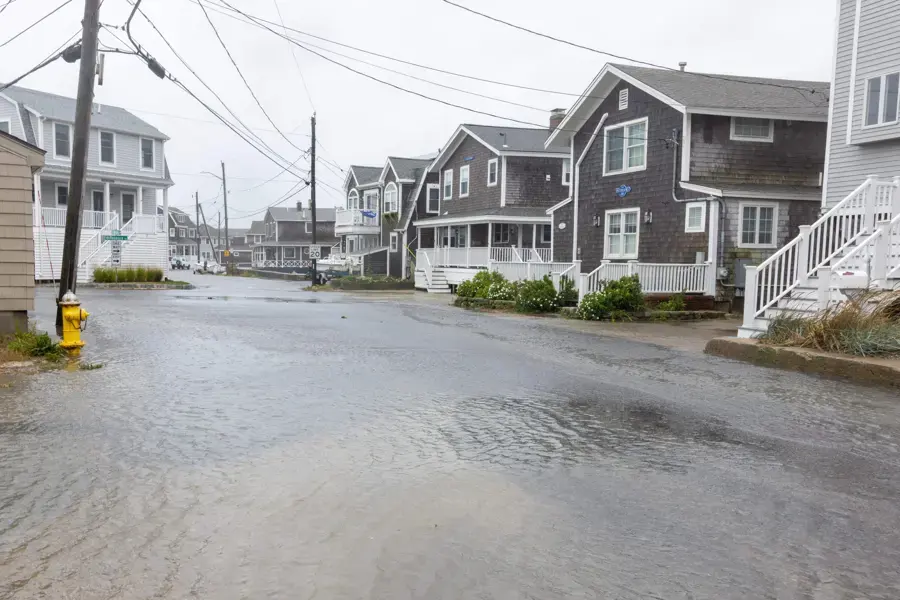
In Holliston, a heavy storm can put water into a house without a single pipe breaking. The cause is often a culvert that cannot carry the flow.
Key takeaways
- Town officials say many of Holliston's flooding problems come from undersized or inoperable culverts and drain pipes.
- Beaver dams have backed up the Fisher Street and Fiske Street culverts, flooding Fisher Street and homes on Bullard Street and Pilgrim Street in large storms.
- Homes near Travis Road, Westfield Road, Richard Road and Dixon Circle in the Jarr Brook area flood in 100 year storms.
- Storm water that enters a house is Category 3, so soft materials that soaked it up are usually removed.
- Pump out first, then dry the structure to a reading, because a basement that looks dry can still hold moisture.
Where the water comes from
Holliston is near the headwaters of the Charles River watershed. Its tributaries include Beaver Brook, Hopping Brook, Chicken Brook and Bogastow Brook.
A culvert is a pipe or channel that carries a brook under a road. When one is too small or blocked, the water backs up and finds another way, often through yards and into houses.
Town officials say many of the town's flooding problems come from undersized or inoperable culverts and drain pipes. That is a different cause than a heavy rain overwhelming a healthy system.
- Beaver Brook, Hopping Brook and Lake Winthrop: mapped as FEMA Zone A.
- Chicken Brook and Bogastow Brook: mostly Zone AE.
- 217.4 acres: the flood prone area local officials identified, 1.78% of the town.
Bullard Street and Pilgrim Street
Beaver dams have backed up the Fisher Street and Fiske Street culverts. In large storms, that has flooded Fisher Street and homes on Bullard Street and Pilgrim Street.
For a homeowner there, the pattern is clear. The water does not come from the plumbing. It comes from the brook, and it arrives with debris and soil.
A homeowner in that position often cannot see the problem from the yard. The culvert is downstream, out of sight, and the first sign is water at the door.
- Fisher Street and Fiske Street: the two culverts that beavers have backed up.
- Bullard Street and Pilgrim Street: the homes flooded when those culverts back up in large storms.
- Brook water: carries silt, leaves and debris into the house.
Why a beaver dam matters
A dam of sticks and mud can narrow a culvert in days, and a storm then finds the pipe full.
What it looks like inside
Water rises through the lowest openings and floor drains, and soaks the lower walls and finished flooring.
The Jarr Brook area
The Jarr Brook area was developed in the 1960s near Westfield Drive, Richard Road and Wingate Road, after the brook was relocated by the developer.
Homes near Travis Road, Westfield Road, Richard Road and Dixon Circle flood in 100 year storms.
A 100 year storm is not a once in a century promise. It is a measure of how rare a storm is, and rare storms do happen.
The brook's original path still shapes where water wants to go. That is why a relocated channel can feel like a threat every time the rain is heavy.
- Relocated brook: the old channel still draws water in heavy rain.
- Dense streets: runoff from roofs and pavement reaches the brook fast.
- Low spots: yards and basements near the brook fill first.
- Photographs: take pictures of the yard and the street, not just the basement, because the path of the water matters.
Storm water is Category 3
Water that comes from a brook, a culvert or a flooded street is Category 3. It carries soil, runoff and bacteria.
That is the dirtiest category, and it changes the cleanup. Carpet, pad, insulation and lower drywall that soaked it up are usually removed.
The Holliston storm and flood cleanup team removes the water first, then cleans and treats what stays.
Flood water also leaves a film of silt behind. Even after the water is gone, the silt dries into a fine dust that has to be cleaned from hard surfaces.
Sump pits and floor drains in Holliston basements are part of the same story, because a pit that is already working hard cannot also handle water coming in from the yard.
Drying a flooded finished basement can take several days of equipment time, and the readings, not the calendar, decide when it ends.
- Extract: pumps and extractors remove standing water.
- Remove: soft materials that soaked up the water come out.
- Treat: hard surfaces get cleaned and antimicrobial.
- Dry: equipment runs until moisture readings reach the dry standard.
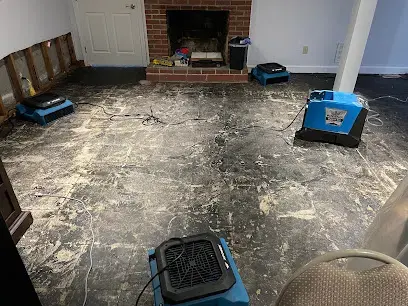
The basement after the water leaves
A flooded basement may look done once the water is out. The slab, the foundation wall and the framing still hold moisture.
The basement flooding cleanup process maps the moisture, runs air movers and dehumidifiers and checks readings until they are dry.
Drying too soon leaves hidden dampness. That is how a basement ends up smelling musty a month later.
Holliston also has two repetitive loss single family homes in the Hopping Brook watershed in eastern Holliston, in flood Zone A. Repetitive loss means those homes have filed flood claims more than once.
The restoration team also helps document the loss. Dated photos, moisture readings and a list of removed materials give an insurer the detail it needs.
What to do before and after the next storm
No homeowner can clear a town culvert. A few steps still help.
Keep storm drains and window wells on the property clear of leaves. Move valuables off the floor, and take photos of the property before a storm so the record is ready.
After the storm, call early. Water sitting in a house gets into walls and framing quickly.
Homes outside the mapped zones can flood too. The flood prone acres the town identified are not the only place water can pool in a hard storm.
- Report: let the town's Department of Public Works know about a blocked culvert.
- Clear: keep gutters and window wells clear of debris.
- Elevate: store items off the basement floor.
- Photograph: record the damage before cleanup starts.
Where to find help
Holliston homes and businesses can reach the restoration team around the clock. The Holliston town page lists every service available in town.
If water is in the house, the sooner it comes out, the less of the structure gets wet.
Businesses in town face the same storms, and the restoration team handles those properties as well.
For businesses, the Washington Street and Route 126 corridors, and parks such as Hopping Brook Park, also deal with storm water, and drying around business hours keeps the doors open sooner.