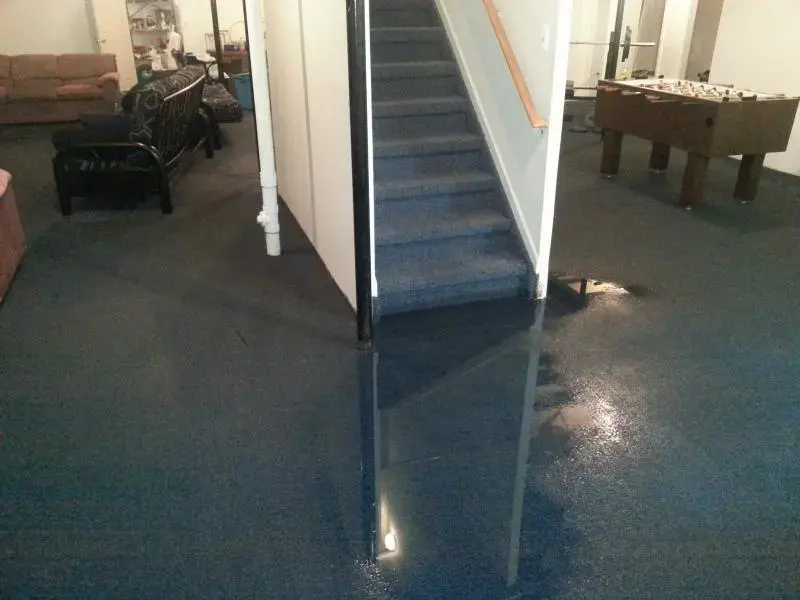
Around Framingham Centre and downtown, many colonials and Victorians date from before 1940 and sit on fieldstone or brick foundations. When water shows up in the basement of a house like that, the first few hours decide how far it spreads.
Key takeaways
- Stay out of standing water until the power to the basement is off, because outlets and panels may be wet.
- Find out where the water is coming from, since rain seepage, a failed sump pit and a burst pipe each need a different fix.
- Fieldstone and brick foundations let water through joints, so the walls need drying, not just the floor.
- Pumping out the water is only the first step; framing, plaster and stored belongings hold moisture long after the floor looks dry.
- Photograph everything before anything is moved, because an insurance claim starts with a record of the damage.
Why older Framingham basements take on water
The older housing around Framingham Centre and downtown was built long before modern waterproofing. Fieldstone and brick foundations are strong, but the joints between the stones and bricks are not sealed.
Water that builds up in the soil outside can press through those joints, especially after a long rain. The March 2010 rainstorms flooded basements across eastern Massachusetts, and homes of this age were among the ones that took water.
The same houses often have a basement that was finished or half finished later, with paneling, carpet or stored boxes against the walls. That is where a small amount of water becomes a bigger loss.
- Joints and seams: water seeps where stone meets mortar, and along the floor where the slab meets the wall.
- Window wells: a clogged well fills like a bucket and spills through the frame.
- Sump pits: a pit that is full, jammed or without power cannot keep up with a heavy rain.
The first hour: make it safe
Safety comes before saving belongings. Water and electricity do not mix, and a basement is where the panel, the furnace and the water heater often sit.
If the water is deep enough to touch an outlet, the house needs the power cut at the main panel by someone who can reach it without stepping into the water. If that is not possible, stay upstairs and wait for help.
What to do right away
These steps take a few minutes and protect people and property.
- Cut the power: shut off the breaker for the basement, or the whole house if the panel is in the wet area.
- Check the source: look for a burst or leaking pipe and, if there is one, close the main water shutoff.
- Move what is safe: lift furniture, boxes and electronics up onto upper shelves or to a dry floor.
- Photograph first: take wide and close photos of the water level, the walls and damaged items.
What to leave alone
Do not run a household vacuum on standing water, and do not walk through deep water barefoot.
If the water came from a sewer or from outside the house, it counts as Category 3 and carries contamination, so the restoration team treats and removes it with protective gear.
Pump out first, then work on the walls
The extraction crew removes standing water with pumps and truck mounted equipment before anything else. The longer water sits, the further it wicks into stone, mortar, wood framing and plaster.
Once the floor is clear, the drying team checks the walls. Plaster and wood lath over a masonry wall hold moisture in places a quick look will miss.
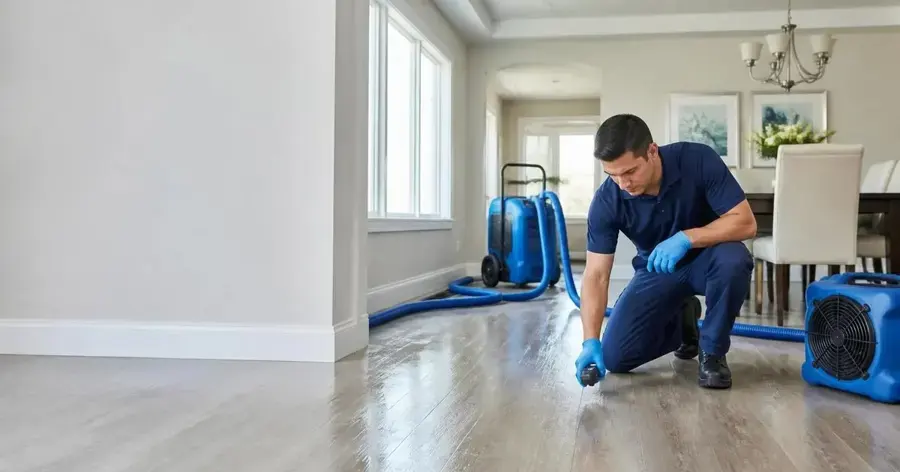
Moisture readings tell the team where the water went. Air movers and dehumidifiers then run until the readings return to a dry standard, which is why a basement that looks dry is not always finished.
- Extraction: pumps and wet vacuums take out the standing water and the slurry on the floor.
- Moisture mapping: meters and thermal imaging show wet framing and plaster behind the surface.
- Structural drying: air movers and dehumidifiers dry the walls and floor to the IICRC S500 goal.
- Removal of damaged material: soaked carpet pad, paneling and drywall come out when they cannot be dried safely.
Finished basements and stored belongings
A basement that was finished later, with carpet over the slab and drywall over the foundation wall, traps water behind the finish. The water that soaked in does not leave when the surface dries.
Cardboard boxes, upholstered furniture and rugs absorb water fast. Photograph them and set aside what can be dried. Items that sat in contaminated water usually cannot be saved.
Keep the list of what was lost with the photos. It makes the insurance claim much easier later.
Items worth sorting early include paperwork, photographs, tools and seasonal decorations, since a basement in an older house often doubles as the storage room for the whole family.
- Dry and salvageable: solid wood furniture, plastic bins with lids, metal tools and glass.
- Usually lost: carpet pad, upholstered pieces, cardboard and particleboard that sat in the water.
- Keep for the claim: a written list with rough ages and values, plus the photos taken before moving anything.
Finding the cause so it does not repeat
Pumping out the water solves the day. The cause decides whether it happens again.
A sump pit that failed in a heavy rain needs a look at the pump and the power supply. A sump pump failure cleanup covers the damage, but the pump itself is a plumber's job.
Water that came through the foundation joints after steady rain is a drainage question outside the house. Grading, gutters and downspouts that dump next to the foundation are common causes.
- Gutters and downspouts: send roof water well away from the foundation wall.
- Window wells: clear leaves and debris so the well can drain.
- Sump pump: test it before a storm by pouring water into the pit.
- Grading: soil that slopes toward the house pushes water at the foundation.
When to call the restoration team
A small puddle from a spilled bucket is a mop and a fan. Water that covers a floor, reaches the walls or has come from outside the house is a job for professionals.
Basement flooding in older homes often goes further than it looks. The basement flooding cleanup team pumps out the water, maps where it went and dries the structure to a reading.
The water extraction crew also handles standing water on other floors, and the whole service area is covered around the clock.