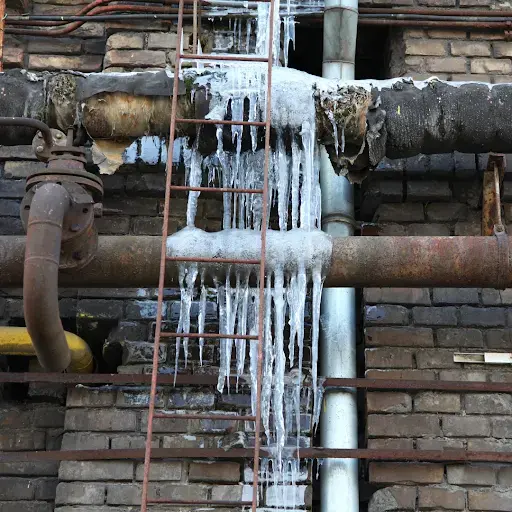
Framingham winters bring hard freezes in January and February, with thaws in between. The pipes that fail are often the ones tucked into exterior walls and baseboard covers.
Key takeaways
- Hot water baseboard heating pipes and supply pipes on exterior walls are among the first to freeze in a hard cold snap.
- Pipes over unheated crawl spaces are also at risk, and the damage may only show after the thaw.
- Fall is the time to check, because once the cold arrives the repairs are harder to make.
- If a pipe splits, shut off the water at the main valve and call for water extraction and drying right away.
- A split pipe can soak a wall cavity, so drying has to go past the surface.
Why Framingham pipes freeze
Framingham sees hard freezes in January and February and freeze thaw cycles that repeat across the season. A pipe that survives one cold night can still burst on the third.
The housing makes a difference too. The 1950s and 1960s build out of capes, ranches and split levels in Nobscot, Pinefield and Saxonville is common here, and many of those houses have baseboard heat and pipes that run along outside walls.
A split in a pipe may take days to show. The house warms, the ice melts and water appears in a ceiling or under a floor that was dry the day before.
- Exterior walls: pipes close to the outside surface lose heat fast.
- Unheated spaces: crawl spaces and garages let cold in around the pipes.
- Baseboard heat: when the system is off or low, water in the pipes can freeze.
- Thaw: ice melts and the split that formed in the freeze starts to leak.
- Wind chill: wind pushing on an outside wall can drop its temperature further than the air alone.
Baseboard heating pipes
Hot water baseboard heat moves water through finned pipe inside the baseboard covers. When the heat is off in a room or the house, that water can freeze.
A frozen baseboard pipe may split along its length. The leak does not show until the ice melts, and then it shows all at once.
The damage from a split baseboard pipe can be wide. Water runs along the wall, under the baseboard and into the floor, and the same pipe can feed several rooms.
- Cold room: a room that heats poorly is a clue.
- Banging or gurgling: air or ice in the pipe makes noise.
- Uneven heat: one baseboard cold while others are warm.
- Damp baseboard cover: a small leak starting.
Signs to watch for
Some warning signs show up before the pipe fails.
- A room that stays cold when the heating is on.
- A baseboard that gurgles or does not warm up.
- Frost on the cover or a damp spot on the wall.
- Pressure that drops on the heating system.
Never thaw it with flame
A hair dryer or warm towels are safer than a torch. Open flame near a wall and baseboard is a fire risk.
Supply pipes on exterior walls
Supply pipes on exterior walls sit between the studs with little insulation around them. In a hard freeze, the wall gets colder than the room, and the pipe goes with it.
The split often happens inside the wall. The first sign may be a stain on the drywall, a bulge in the plaster or water on the floor below.
Walls on the north and west sides of a house tend to be the coldest, and a pipe near an outside corner is the most likely to freeze first.
- Water stain: a brown or yellow mark on a wall or ceiling.
- Bubbled paint: moisture behind the finish.
- Soft drywall: it gives when pressed.
- Musty smell: moisture trapped in a cavity.
A fall checklist
The best time to protect pipes is before the first hard freeze. A few small jobs can prevent a big loss.
Pipes over an unheated crawl space need the same care. A pipe there can freeze without any sign inside the living space.
Heat tape and pipe insulation are worth a look for pipes in the coldest spots. A plumber can recommend what fits a particular house.
On very cold nights, leaving a faucet dripping slightly keeps water moving and can help prevent a freeze.
- Insulate exposed pipes: foam sleeves are cheap and quick to fit.
- Seal air leaks: close gaps near pipes where cold air enters.
- Disconnect hoses: shut and drain outdoor faucets.
- Open cabinet doors: on a cold night, let warm air reach sink pipes on outside walls.
- Keep the heat on: set the thermostat to a safe temperature when away.
- Know the main shutoff: everyone in the house should know where it is.
If a pipe splits
The first step is to shut off the water at the main valve. That stops new water from reaching the break.
Then open a faucet at the lowest point to drain what is left, and cut power to wet areas if water is near outlets.
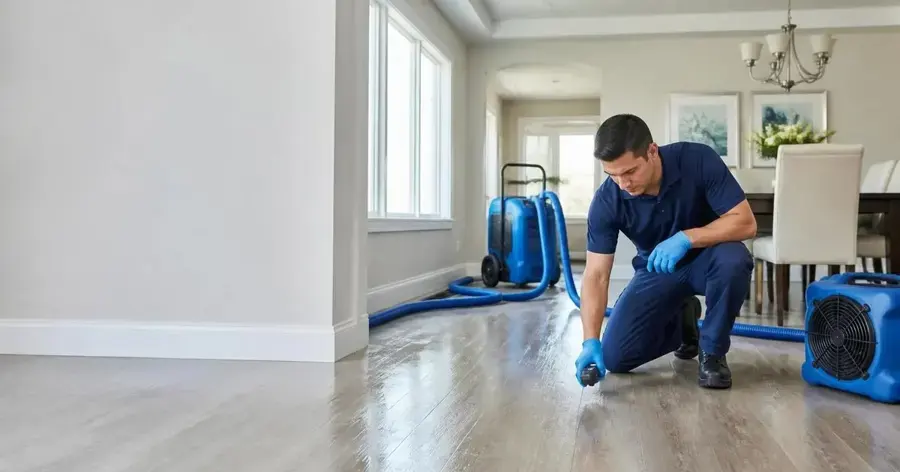
The frozen pipe water damage team removes the standing water, finds the extent of the wet area and dries the cavity.
If the water has soaked ceilings below, the same steps apply, with extra care around light fixtures and anything that hangs from the ceiling.
- Main valve: shut it off first.
- Faucets: open the lowest one to drain the pipes.
- Power: cut breakers to wet rooms.
- Photos: record the damage before cleanup.
- Phone call: the restoration team takes it from there.
Drying inside the wall
A split pipe in a wall soaks the insulation, the studs and the back of the drywall. The surface may look fine while the cavity is wet.
The drying team checks moisture with meters and thermal imaging and opens the wall where needed. Air movers and dehumidifiers then run until readings reach the dry standard.
The burst pipe cleanup page explains how the water is traced, extracted and dried.
If the heating pipes were affected, a heating professional repairs the pipe. The restoration team dries the wall, the floor and the ceiling below.
For a house with finished walls, the work can include removing a section of drywall or plaster, drying the framing and replacing the material later.
When to call
If a pipe has split, call early. Water that sits in a wall gets worse every hour.
The restoration team covers Framingham around the clock, and the whole service area is covered. Calling at the first sign of a leak, even a small one, keeps the damage smaller.
Fall is also a good time to ask a plumber or heating contractor to look at the pipes that worry the homeowner most.
A quick phone call with the details, such as which room, where the water is coming from and whether the main valve is off, helps the team plan.