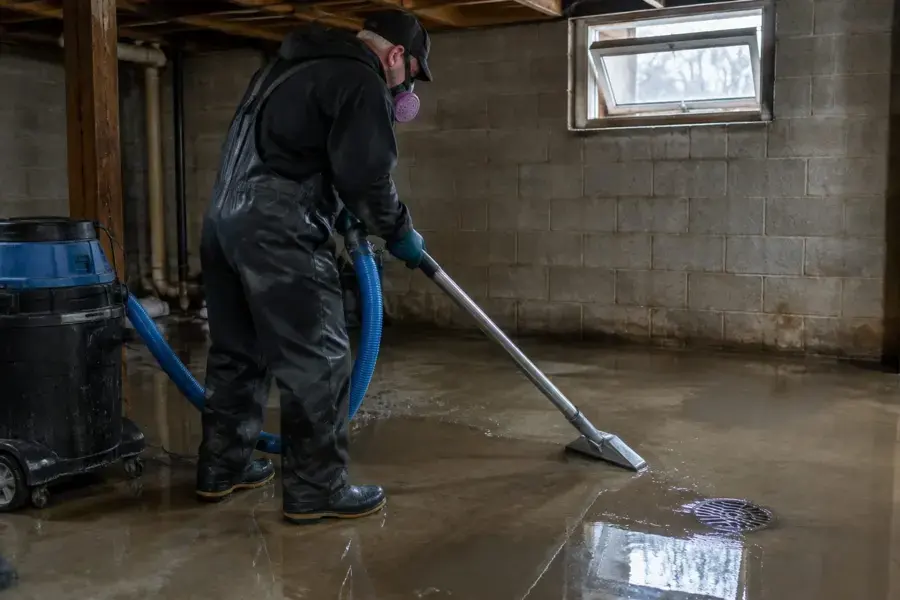
After a hard rain, some Ashland homes get a surprise from the floor drain or toilet. The storm did not come through the roof. It came up through the sewer.
Key takeaways
- A sewer backup is Category 3 water and carries bacteria, so it is never treated like a clean leak.
- Heavy rain can get into sewer pipes, and in March 2010 that stressed Ashland's system.
- Ashland's wastewater goes through the City of Framingham sewer system into the MWRA system.
- Do not use the drains, keep children and pets out and do not try to clean it up with household tools.
- Porous materials that touched sewage, such as carpet, pad and drywall, are usually removed.
How rain ends up in a sewer
Sewer pipes are meant to carry household wastewater, not storm water. In heavy rain, though, water can get into the pipes from cracks, joints and groundwater.
That extra water can fill the system faster than it can carry it away. When the system backs up, the weakest point is the lowest drain in a house, often in the basement.
A heavy downpour is the usual trigger, but a long wet spell can do the same thing. The ground is already full, so more water reaches the pipes through the same cracks.
- Groundwater infiltration: water seeps into pipes through joints and cracks.
- Storm surge: a long downpour fills the system in a short time.
- Low drains: basement floor drains and showers are the first place a backup shows up.
What Ashland's own record shows
In the March 2010 storm that flooded much of eastern Massachusetts, Ashland's Fire Department responded to flooding basements. The sewer system was stressed by rain entering the pipes.
Ashland sends its wastewater through the City of Framingham sewer system into the MWRA system, to the Deer Island Treatment Plant in Boston.
In 2026 the town is cleaning and televising sewer mains on many streets to find groundwater infiltration. Residents may notice sewer odors from drains during that work.
That cleaning work is a sign the town is taking infiltration seriously. For a homeowner, it also means a drain odor during that period is worth reporting, and a backup is worth treating as an emergency.
Why sewage is not like other water
Restoration crews sort water into categories. Category 1 is clean supply water. Category 3 is the worst, and sewage always sits there.
A sewer backup carries bacteria, viruses and waste. Even a thin film on a floor needs proper cleanup, and the water cannot simply be mopped and dried.
Gloves and boots from the garage are not protective enough. Sewage can also carry organisms that stay on surfaces and in porous materials long after the visible mess is gone.
What counts as Category 3
Anything that came up through a drain or toilet from the sewer side.
- Backups through floor drains, tubs and toilets.
- River and storm flooding that mixed with sewage.
- Water that sat for a long time and turned dirty.
What that changes
The crew wears protective gear, contains the area and removes porous material instead of drying it.
What to do while waiting for help
The goal is to keep the contamination from spreading to more of the house. A few simple steps help.
If anyone in the house feels ill after contact with the water, a doctor is the right call. The restoration team handles the building, not the people.
- Stop using water: do not run sinks, showers, washers or toilets, since that sends more water into the backup.
- Keep people out: children, pets and anyone with a weak immune system should stay away.
- Close doors: closing the door to the affected room slows the spread of odor and airborne contamination.
- Do not use a household vacuum: it spreads contamination through the air.
- Photograph the damage before anything is moved.
How the cleanup works
The sewage cleanup team in Ashland starts by containing the area and removing the standing sewage.
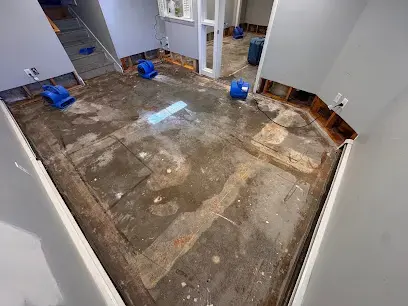
Next, damaged porous materials such as carpet, pad, baseboards and lower drywall are removed. Hard surfaces are cleaned and treated with antimicrobial.
Only after that does drying begin. The drying team uses air movers and dehumidifiers and measures moisture until it reaches the dry standard.
Contents are sorted at the same time. Hard items such as plastic bins and metal tools can be cleaned and returned, while cloth, paper and wood that soaked up sewage are usually discarded.
- Contain: seal off the area and set up protective barriers.
- Extract: remove standing sewage and slurry.
- Remove: take out materials that cannot be cleaned.
- Treat: apply antimicrobial to what stays.
- Dry: run equipment until readings match the dry standard.
When the basement is the problem
Many sewer backups arrive through the basement, because that is the lowest point in the plumbing. The basement flooding cleanup team handles the water, the damaged finishes and the drying together.
If a backup keeps coming back, the cause may be in the house pipe or in the public pipe. The restoration team cleans the damage, and a plumber or the town's Water and Sewer Department looks at the cause.
Repeat backups have patterns. If water comes up in the same drain every heavy rain, that is a sign to ask a plumber to look at the pipe from the house to the street, and to report it to the town.
- Floor drains: a backup here is common because it is the lowest outlet.
- Tubs and showers: these can bubble or gurgle before a backup arrives.
- Toilets: slow flushing during heavy rain is an early warning.
- Odors: a sewer smell during heavy rain is worth noting for the plumber.
Plumbing work and permits
Ashland's Inspection Services handles plumbing and gas permits and inspections. Any repair of the pipes themselves belongs with a plumber and falls under those local rules.
The restoration team does not replace the pipe. It makes the house safe, clean and dry again, so the repair can happen on a clean worksite.
For more on the whole range of services in town, the Ashland town page lists them all.
Chapter 247 of the town code also prohibits illicit connections to the storm drain system. A proper repair keeps roof drains, sump discharge and sewer pipes where they belong.
- Keep records: dates, photos and the name of any plumber who inspected the pipe.
- Ask for a camera inspection: a plumber can see the inside of the pipe.
- Report repeat backups: the town's Water and Sewer Department wants to know.